
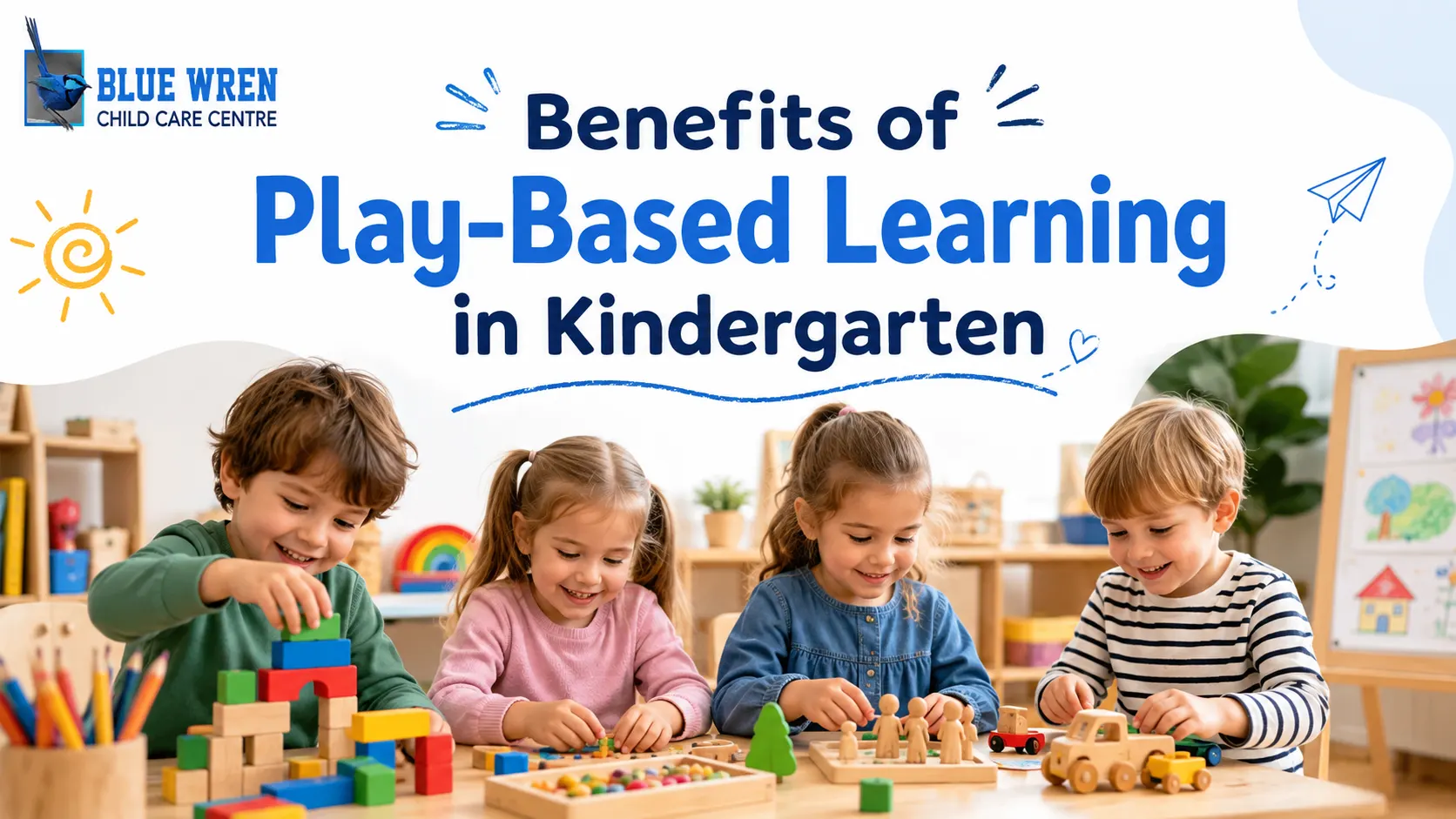
The best way in which children can learn is when they are inquisitive, enthusiastic, and allowed to experience things for themselves. Play allows little kids to benefit from real experiences that help them become better problem solvers. Children can ask questions, solve problems, talk to people and learn new things. This is one of the reasons many teachers today utilise play in their teaching approach.
A good kindergarten in Hawkesbury should create an experiential learning environment using play. The teaching strategies should focus on making the learning process discovery-based rather than relying solely on traditional methods of teaching.
What Is Play-Based Learning?
Learning through games is a method that uses games as a tool for the learning process. Teachers or instructors create situations where children can take part in games, make discoveries, and learn new things. Activities that can be involved in this process are building blocks’ games, designing, telling stories, games of pretend, puzzles, singing, outdoor activities, and group games. The teacher still plays a vital role in this process.
The teacher not only helps to find out the interests and likes of the kids but also introduces different activities that correspond with their educational needs. The teacher can ask the children various questions, give them new materials, or motivate them to find a different way of doing the task.
Encourages Creativity and Imagination
By engaging in play, kids gain the chance to let loose their imagination. Even an ordinary box may be transformed into a house, store, vehicle, or spaceship. While interacting with other children when playing, kids can create narratives and characters. Creative play gives a chance for expression and promotes original thinking. These experiences may nurture creativity, which can serve kids throughout their learning. Art, music, and construction, as well as pretend play, may give kids a chance to be creative.
Develops Social Skills
It is often through playtime that children learn how to engage with their peers. For example, they play games in groups, which allows them to learn the importance of sharing, listening, and waiting for their turn. Furthermore, this activity helps them convey their ideas. Various disputes may arise during the process, but with adequate assistance from their educators, children will learn to handle these situations in a positive way.
As a result, they will begin perceiving the world in a different way, as they will be able to feel sympathy towards others. In a play-based learning childcare centre, children can be provided with regular experiences to practise these skills. These experiences will support children to communicate more confidently with others.
Supports Problem-Solving Skills
Play often presents children with small challenges. They may need to build a stable tower, complete a puzzle, create a structure, or decide how to include another child in their game. These situations encourage children to think independently. They can test ideas and learn from mistakes. If that plan fails, they will try a different path. This teaching and learning mechanism encourages children to see mistakes as learning. It also develops their ability to think critically and find solutions.
Learning From Mistakes
Play creates opportunities for children to face minor challenges. For example, they might have to build a tall tower, solve a puzzle or create a construction project or strategy to incorporate another child into their play. These experiences help develop independent thinking skills. Children try out ideas, learn from their mistakes, and develop an understanding that making mistakes is part of the learning process. If one method doesn’t yield satisfactory results, they know they have others to work with.
Builds Language and Communication
Using language is promoted by play. In pretend play, children may talk to one another, tell stories, and express their thoughts. These kinds of play also encourage children to communicate with each other. Teachers can help in such learning by helping children expand their vocabulary and asking them questions that require more than a one-word answer. For instance, children may be asked to describe what they are building or say what happens next in their story.
Improves Physical Development
Playing is also favourable for physical growth. Games outside, such as climbing, running, keeping balanced, and jumping, enable children to acquire basic motor skills. Activities such as drawing, scissors cutting, building, and threading will provide the development of delicate motor skills. Well-balanced programs give children the opportunity to move the body during the day. Activities using the body allow children to develop coordination, strength, and body awareness. Outdoor games can offer many additional advantages. Children can learn from nature while continuing to move.
Makes Learning More Engaging
Various types of games can appeal to those young learners who may find it difficult to concentrate in long formal classes. As a result, this will continue to assist teachers with numerous basic concepts such as numbers, colours, shapes, letters, and simple science concepts. Children also improve their skills through several activities that are significant to them. This is a good reason why many early learning centres consider games to be part of their everyday practices.
Builds Confidence and Independence
Playing gives children the freedom to choose. Children can select their materials, decide their role, and choose the means with which they can undertake activities. Those small choices make a child independent. Children also feel more confidence as they know that they did everything by themselves. In this respect, building something on their own is a way of getting that sense of achievement.
Prepares Children for School
Learning through play is not only about having fun but also developing competencies that children will carry into formal education. Children learn to obey rules, play well with others, focus on what they have to do, express themselves, and deal with simple situations. Those who have acquired these skills will find it easier to adapt to a more serious school environment. The parents who are searching for kindergarten in Hawkesbury can think about how the centre combines play with teaching.
Choosing the Right Learning Environment
All children are different in their development process. A proper learning environment must be able to take into account personal wants, skills, and types of learning. Parents can get interested in the daily procedures, education principles, outdoor activities, and role of games played in the process of teaching children. Parents can ask early learning centres how teachers see children developing and how they adapt children’s experiences based on what they observe.
A play-based learning childcare centre on the principle of learning through games is expected to give children a possibility to experiment, express themselves, and learn without limits. While playing is a natural process for children, it also can be turned into a powerful educational tool. When employed in a skilful way, play gives a child a chance to obtain social, emotional, physical, speech and thinking abilities.
Also Read: Signs Your Child is Ready for Kindergarten