
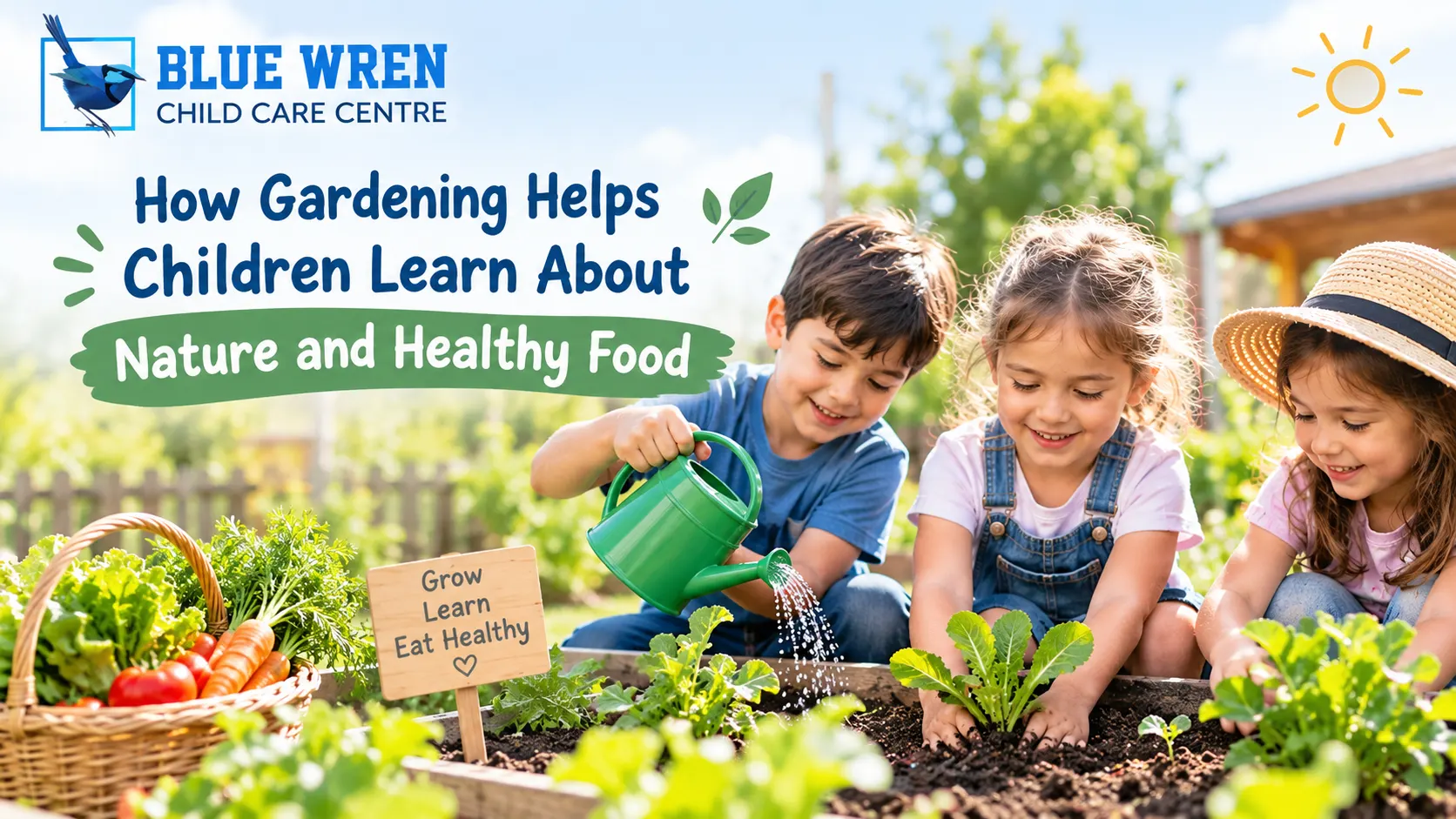
Gardening is a low-cost activity which offers children the chance to have some experience of nature. They can dig the earth, plant seeds, water the flowers and see life appearing from it. These simple actions have high educational value. With the help of gardening, children can learn about where their food comes from and understand the importance of fresh food. It has practical activities and allows kids to experiment. Children will learn by actually doing things in the garden instead of just listening to a lecture.
Children Discover How Nature Works
A garden gives children the chance to watch how the natural world works. They see how seeds become plants. They see roots and stems and leaves and flowers and fruit as well as bugs and birds and worms. This experience allows them to learn that nature is made up of different elements that work together. For example, bees help pollinate flowers and so on.
Worms help improve the quality of the soil. Animal and plant life benefits from the presence of sunlight and water. These observations bring in some science concepts in a very simple way that kids can easily understand. A teacher can cultivate kids’ creativity by asking them questions, such as why plants require water or what makes leaves change their colour. Kids also wonder where bugs go at night.
Gardening Builds Healthy Food Habits
Children learn more about healthy foods because of gardening. A lot of children don’t know the process of how vegetables grow. They’re familiar with seeing carrots, tomatoes, or lettuce in the store. But growing food changes it all. Children get a chance to see how to plant the seeds of vegetables and take care of them for a long time. They get to see how vegetables grow before they pick them.
Involvement in the production of the food may be an additional opportunity for children to feel a sense of achievement. Children could be involved in washing the vegetables and preparing some simple meals or snacks. This may encourage children to develop a positive attitude towards the taste of food that they have previously rejected, and teachers can develop the garden-based curriculum to include a variety of fruits, vegetables, herbs and other edible plants while focusing on textures, colour, smell and taste – helping to develop healthy food behaviours without making it seem like hard work for children.
Learning Through Play
Gardening is one of the play-based learning childcare centres that can be introduced to children in childcare centres throughout the year. Children will have the chance to dig, pour water, move soil, gather leaves, and put seeds in order. All these activities will be perceived by children as play and still help them master various skills. For example, children can learn to count their seeds before they plant them. Also, they will learn to find out which leaf is bigger or smaller as compared to the other leaves.
They may track the height of plants growing every week. Kids are likely to do plant drawings and record end results of changes in their growing diaries, etc. This will help them to learn subjects such as maths and science, language arts and art, etc.
Building Responsibility
A garden provides kids with some minor responsibilities. Children may water vegetation, pick out dead leaves, or determine if the earth is dry. Doing garden work helps children understand that all living things require care and attention. Gardening also builds patience in children, as it takes time for the plants to grow and some care is required.
Young children discover that achieving positive outcomes often demands giving sustained effort. There are many early learning centres that are capable of making small gardens in case there is not too much space available. For instance, pots, planter boxes, hanging gardens, and herb containers are very effective too.
Learning With Others
Gardening teaches children to become a team. One child may be performing watering duties while another is examining leaves. While the third child may assist harvesting. Being a part of a team teaches sharing, communication, and working together. Also, gardening provides the possibility of communication. The teacher may introduce new vocabulary associated with plants and nature.
Kids can talk about what they view and point out to others what they are doing. The centres can also engage families in similar gardening activities. Family members can bring seeds and plants to the centres, suggest gardening ideas or talk about their culture’s food. That can help children learn better.
Connecting Gardening With Everyday Life
It is clearly evident that what a child learns in the garden can be carried to the classroom and further afield. Class teachers can discuss the garden with the children and connect the know-how to other areas of learning. For instance, cookery, art, or science. For example, the child may produce drawings that reflect garden plants. The child can actually make salad from the vegetables grown.
Students might employ leaves, flowers and seeds in their art education. Introducing guided art education helps to make things much more accessible. Kids come to understand that nature is also a part of their life. It provides them with food, shelters animals and creates their environment.
Creating Better Learning Experiences
A garden doesn’t have to be big or intricate. A few pots to plant in will provide children a lot of good experiences. It’s not about raising healthy food; it’s about having children involved in gardening. A play-based learning childcare centre can turn everyday encounters into extraordinary encounters! Use the activities of everyday life as learning experiences through the medium of gardening. Enable children to make, to explore, to experiment, to play, to research and to discover their own rhythm! Early learning centres can teach children about ecology, healthy eating, responsibility and sustainability by providing gardening activities.
They also discover how to connect to the world through this activity. While gardening is not merely about spending time outdoors, it helps your kids understand nature and how their food is created. It will also help your kids develop patience, responsibility, the ability to stay curious and learn to think in other ways. Childcare centres create gardens in their premises where your kids learn by having fun. Best of all, they learn more about nature that they will learn to adore.