
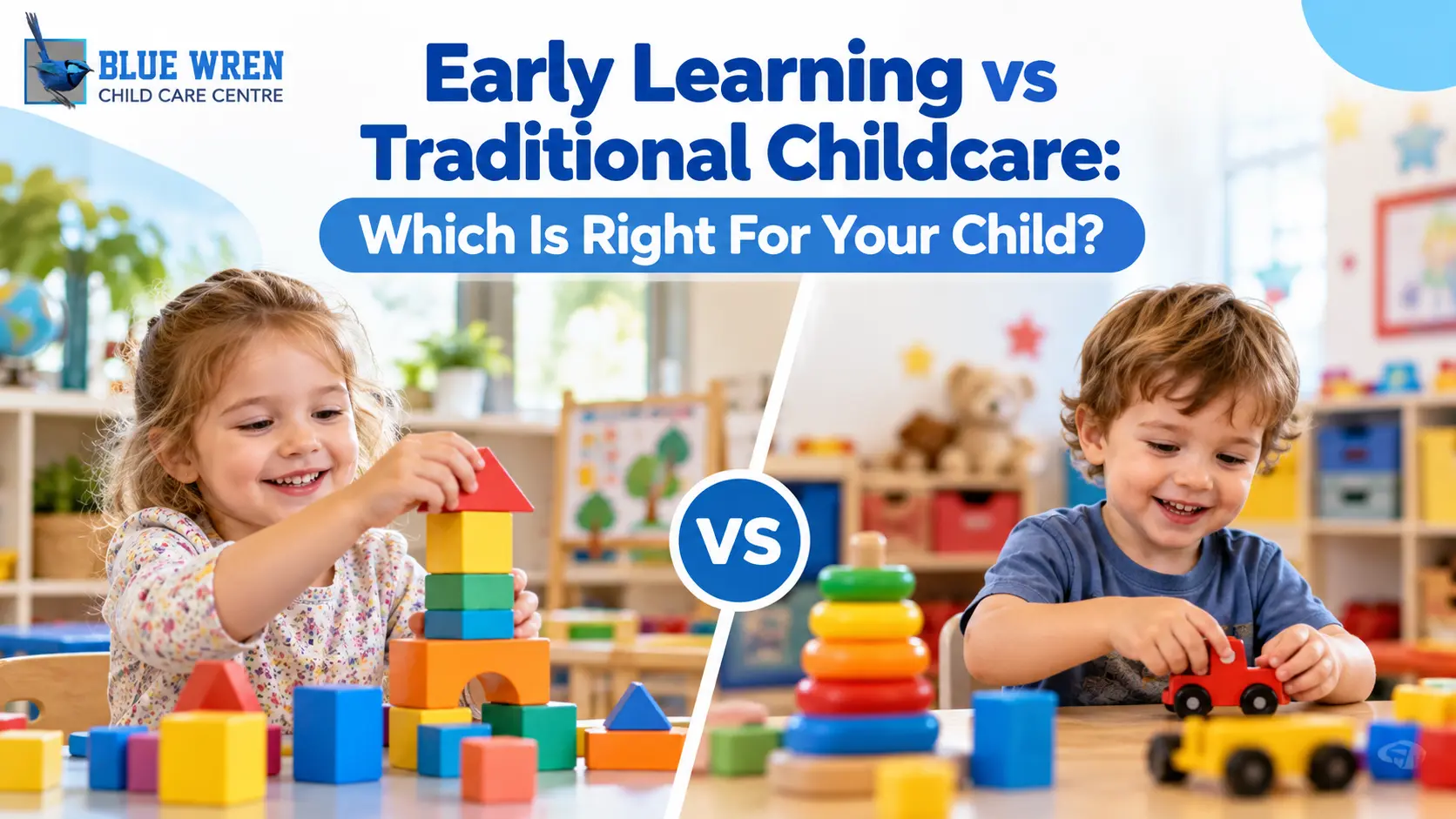
Making the decision about childcare is significant for parents. The appropriate setting is crucial for a child’s learning, development, social skills, and confidence. Meanwhile, every child has different needs. Each kid has a better chance of excelling in a traditional childcare environment or an early learning environment. Many families will decide between early learning and traditional childcare and come to a conclusion as to which is better.
What Is Early Learning?
Early education emphasises the child’s progress through routine acts and experiences throughout the day. Children gain knowledge through playing, storytelling, music, creative activities, physical activities, and contact with others. Educators carry out actions that help children develop different aspects, which may involve language, communication, problem-solving skills, motor skills, creativity, and social skills.
Different early learning centres apply age-based approaches to cater to children’s individual requirements. Educators investigate children’s learning processes and improve activities when necessary.
What Is Traditional Childcare?
Conventional childcare mainly emphasises giving children a secure and supportive environment while their parents are engaged in other duties such as work. Here children get to interact with other kids, play, eat and sleep. In a traditional learning centre, children get to interact with other kids, play, eat and sleep. Although a conventional childcare centre may also provide educational activities, daily activities are typically focused mainly on care, routine, games, and socialising. This option is suitable for families that seek a laidback atmosphere. Additionally, it is appropriate for kids that wish to learn through play activities.
Learning Through Play
Both approaches might involve the use of play in part of children’s day. The way that this play is structured by educators is often where they differ. Early childhood programs may link play to specific areas of development. For example, using building blocks could encourage problem-solving, and storytelling could support language and communication skills. Whereas traditional childcare means that there is likely to be more open-ended play, where children themselves are allowed to select their favourite activities. In this way, they can develop independence and social skills.
Social Development
The early years are important for social development. This is the time for children to learn about sharing and communicating, as well as cooperating in getting their emotions under control. Social development is provided by both types of childcare. Groups help children develop friendship and interaction. Both types of childcare involve much support from educators, who guide children through various situations in life. This is how children learn right from wrong and express themselves correctly. Parents should pay attention to how each childcare centre promotes social development. A pleasant and respectful environment will help children feel safe.
Daily Routine and Structure
Having routines can be a benefit for the children in many ways. Once you know when the meals, naps, playtimes and outside play happen in a childcare centre, it becomes much easier for a child to settle into the centre.
The structure of childcare centres have in the daily routine varies. Some centres follow the entire set day routine very closely, and others have a lot more freedom to be flexible about when certain activities happen. It is worthwhile asking how they run their daily routine on a day-to-day basis. Ask how staff decide when to break to allow time for relaxing and if they ask the children whether they want to relax for a while or whether they want to go for a walk.
Preparing Children for School
The skills that young kids learn early in life prepare them for when they get to school. These can include listening and paying attention, following directions, repeating a pattern, saying a word or sentence or sharing and taking turns with other kids. But being ready for school isn’t just about skills. Confident and independent kids can do things like clean up their room, select an activity, communicate their needs, and work with other children. Parents need to look at the big picture, not worksheets and numbers.
How Should Parents Choose?
It is important to know that there is not just one approach that fits all families. Parents need to consider factors such as their child’s personality, interests, daily habits and development needs. They can visit several early learning centres and check the environments. They can also talk to the educators and ask about their planning. They can also ask how the learning centres communicate with families. Parents may also want to visit a traditional learning centre to see how it works. They can ask the staff about their daily routines, play opportunities, number of carers and learning experiences. The physical environment is also very important.
Questions to Ask Before Enrolling
Parents may find it helpful to ask some basic questions prior to reaching an agreement, like:
* What is a day like?
* How would activities be planned by educators?
* How do children utilise their time outdoors?
* What methods does the centre have to promote individual growth?
* What forms of communication exist between educators and parents?
* What is done if a child ends up feeling low?
* How are food and rest periods organised in the centre?
* What opportunities are provided for playing freely?
These answers can give you the information to decide if the environment is right for your child.
Making the Right Choice for Your Child
It is not only a question of learning compared to care when it comes to early learning and traditional childcare. Both approaches can provide children with the benefits of care, play, social experiences, and opportunities for development. The main difference lies in the way the daily activities are planned and what goals are pursued.
Another important factor is families themselves, their schedules, and priorities. Take some time browsing different childcare centres before you decide. Pay attention to how educators communicate with children. Watch if children seem relaxed, interested, and helped. Choose a place that will offer your child the impression of being safe, loved, and motivated to learn for their future development.