
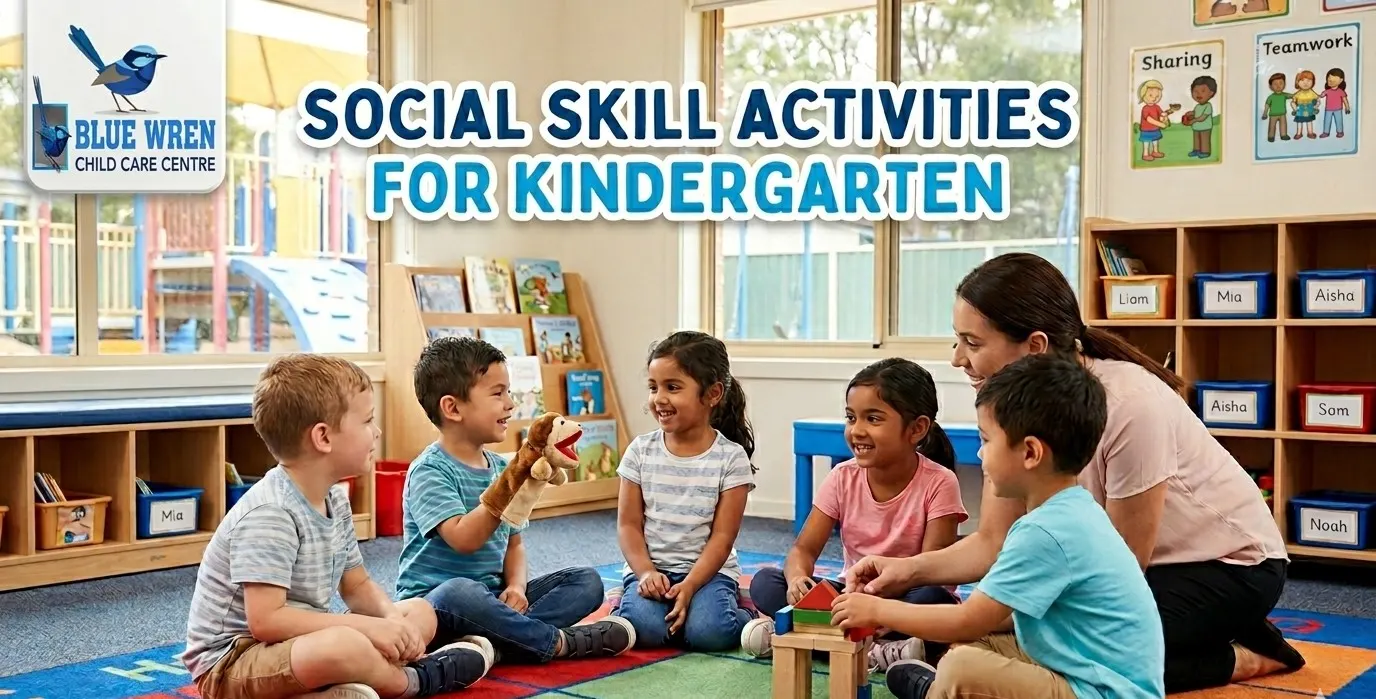
Kindergarten is a vital part of your child’s growth and development. At this age, children learn how to communicate, build relationships, share, and participate in the social environment. Early development of sound social skills will allow children to feel comfortable in group settings and will set the stage for successful growth in school and other areas of their life.
Many parents are searching for the best childcare centre Kurmond that provides a well-rounded educational environment and promotes social and emotional growth through activities planned to help children develop cooperation, empathy, communication, and problem-solving skills as a part of a positive learning experience.
Why Social Skills Matter in Kindergarten
These social skills are the cornerstone to good relationships and positive learning. A child who is provided with an opportunity to learn this skill early will:
* Build strong friendships
* Communicate effectively
* Work well in groups
* Manage emotions appropriately
* Resolve conflicts peacefully
* Develop self-confidence
Childcare service in Kurmond is committed to delivering high quality and recognises the value that a balance between learning and socialising will provide. Children get to socialise and learn from other children on a daily basis.
#1. Role-Playing Games
Play-acting is the best of the many activities suitable for teaching social skills to kindergarteners. Playing the roles of doctors, teachers, shopkeepers, firemen or whatever they imagine is beneficial for teaching children to listen, work with others, and see things from others’ points of view. Children can be guided in playing house by the following:
* Take turns speaking
* Listen to others
* Practise empathy
* Develop problem-solving skills
Imaginative play of this nature provides valuable practice for real life and reinforces their confidence.
#2. Circle Time Discussions
Circle time provides a secure space for children to share their thoughts, experiences and feelings. Topics like friendship, kindness and teamwork can be facilitated during these group conversations. The children are taught to:
* Listen respectfully
* Wait for their turn to speak
* Express ideas clearly
* Understand different viewpoints
Families looking for the best childcare centre Kurmond really appreciate programmes that involve circle time because communication and confidence develop very early.
#3. Cooperative Building Activities
By building towers, playing with blocks to make things or doing a collaborative building task, kids practise working together. They use these tasks to achieve a common objective, as well as sharing and compromise. Other benefits are:
* Improved cooperation
* Enhanced communication
* Better conflict resolution
* Increased patience and persistence
These games reinforce the fact that co-operating is much more effective than fighting against each other.
#4. Partner Art Projects
The value of art projects can be increased by doing them in pairs or small groups. Shared printing, drawing, or crafts will teach kids how to exchange ideas, compromise, and share decisions. With partner art projects, children learn how to:
* Respect for others’ ideas
* Teamwork
* Positive communication
* Flexibility
Collaborative creative projects can frequently be part of the everyday curriculum in high-quality long day-care centres, such as Kurmond, in order to encourage both creative and social learning.
#5. Friendship Games
Low-stakes friendship games provide opportunities to practise good social skills through play. A game of “find someone who” or friendship bingo, for instance, prompts children to approach peers and identify similarities and shared experiences. Children will learn the following:
* Meet new friends
* Develop conversation skills
* Build confidence
* Feel included within the group
Friendship-oriented activities are especially beneficial for children who are perhaps introverted or lack confidence in approaching peers.
#6. Storytelling and Group Reading
Books are a great way to explore emotions, relationships and social situations. Following the story, teachers can ask children how the characters felt, why they did what they did and what they might have done differently. Story-related discussions promote:
* Empathy
* Emotional awareness
* Listening skills
* Critical thinking
Childcare service in Kurmond uses the stories effectively to impart social and emotional lessons to the children in an age-appropriate manner.
#7. Team-Based Outdoor Games
Outdoor play inherently promotes teamwork and cooperation. Relay races, obstacle courses, or a whole-group activity give children the chance to talk and work together with their peers. Outdoor group play benefits children by fostering the following:
* Leadership skills
* Cooperation
* Confidence
* Respect for rules
In addition, these experiences provide good role-modelling and guidance for children about coping with success and failure.
#8. Emotion Matching Activities
Knowledge of feelings is fundamental in social learning. Games focusing on the matching of emotions to facial features, cards, or pictures help children identify and articulate various emotions. Through these games children are learning:
* Emotional vocabulary
* Self-awareness
* Empathy for others
* Appropriate emotional response
Understanding both their own and others’ feelings helps children deal with social situations and positive relationships better.
#9. Sharing and Turn-Taking Activities
Most of the kindergarteners have not mastered sharing and waiting for turns; it is important to teach children through games and activities where there is a need to take turns, such as the following:
* Board games
* Group puzzles
* Musical games
* Fassing activities
Learning patience, equity and respect are invaluable social skills acquired in all of these areas.
#10. Group Problem-Solving Challenges
Simple challenges that require teamwork help children learn how to communicate and collaborate effectively. Whether building a bridge from blocks or solving a classroom puzzle together, children gain valuable experience working towards common goals. These activities encourage:
* Cooperation
* Creative thinking
* Decision-making
* Respectful communication
Most parents wanting a long daycare centre Kurmond are interested in those with social and learning opportunities.
Conclusion
Socially proficient children create relationships with others, feel comfortable communicating with others, and perform well academically. Opportunities for children to work as a team and learn about empathy and cooperation through engaging activities allow them to develop much-needed life skills. Quality long-daycare centre Kurmond offers children experiences and a supportive environment to help them develop critical social skills.